
의원 발의의 요건부터 국회 심의까지, 일본의 입법 과정 이해하기
앞선 글에서는 일본 정부가 제출하는 법률안과 내각법제국의 역할을 살펴보았습니다. 담당 부처가 정책을 법률안으로 구체화하고, 내각법제국의 심사와 내각의 의결을 거쳐 국회에 제출하는 과정이었습니다.
그러나 일본의 법률이 모두 정부에서 시작되는 것은 아닙니다. 국회의원도 법률안을 제출할 수 있습니다.
국회의원은 국민을 대표하는 정치인으로서 사회의 문제를 발견하고, 이를 해결하기 위한 법률을 제안할 수 있습니다. 정부가 추진하는 정책을 법률로 만드는 것뿐 아니라, 국회의원이 직접 입법 의제를 제시하는 것도 국회의 중요한 역할입니다.
그렇다면 일본에서 국회의원이 법률안을 제출하려면 어떤 요건을 충족해야 할까요? 그리고 제출된 법률안은 어떤 절차를 거쳐 실제 법률이 될까요?
이번 글에서는 일본의 의원 제출 법률안을 중심으로 입법 과정을 살펴보겠습니다.
1. 국회의원은 직접 법률안을 제출할 수 있을까요?
일본에서는 내각뿐 아니라 국회의원도 법률안을 제출할 수 있습니다. 일본 헌법 제41조는 국회를 국가의 유일한 입법기관으로 규정하고 있으며, 일본 국회법은 의원이 법률안을 발의하는 절차를 정하고 있습니다.
여기서 말하는 의원 발의는 국회의원이 새로운 법률을 만들거나 기존 법률을 개정하기 위해 법률안을 제안하는 것을 의미합니다.
예를 들어 다음과 같은 상황을 생각해 볼 수 있습니다.
•기존 법률로는 해결하기 어려운 사회문제가 발생한 경우
•새로운 제도나 권리 보호 장치가 필요한 경우
•정부의 정책과 다른 대안을 입법으로 제시하려는 경우
•기존 법률의 문제점을 개선하기 위해 개정이 필요한 경우
이처럼 의원 입법은 행정부가 제시한 정책을 심의하는 데 그치지 않고, 국회의원이 직접 입법의 필요성을 제기할 수 있는 통로입니다.
다만 국회의원 한 명이 법률안을 제출하고 싶다고 해서 언제나 단독으로 발의할 수 있는 것은 아닙니다. 일본 국회법은 법률안 발의에 필요한 의원 수를 규정하고 있습니다.
2. 법률안을 발의하려면 몇 명의 의원이 필요할까요?
일본 국회는 중의원(衆議院)과 참의원(参議院)으로 구성됩니다. 의원 발의에 필요한 찬성 의원 수는 어느 원에서 발의하는지, 그리고 법률안에 예산 조치가 필요한지에 따라 달라집니다.
일본 국회법 제56조에 따른 요건은 다음과 같습니다.
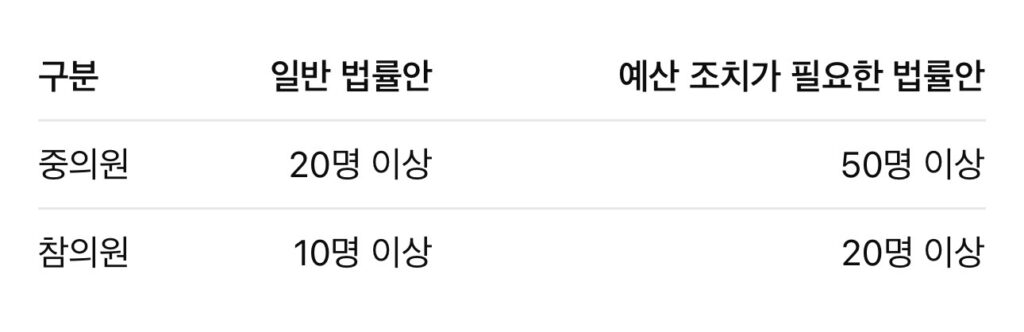
예산 조치가 필요한 법률안은 법률의 시행에 필요한 예산 조치가 수반되는 경우를 말합니다. 이러한 법률안을 발의할 때는 필요한 경비를 밝힌 문서를 첨부해야 합니다.
이 요건은 의원 입법의 중요한 특징을 보여 줍니다.
국회의원은 개별적으로 입법 문제를 제기할 수 있지만, 정식으로 법률안을 발의하려면 일정한 수의 동료 의원을 확보해야 합니다. 따라서 의원 입법은 개인의 문제의식에서 출발할 수 있지만, 실제 발의 단계에서는 다른 의원들의 동의와 협력이 필요합니다.
3. 법률안은 어떻게 준비될까요?
의원이 법률안을 발의하려면 먼저 무엇을 바꾸려는지, 왜 새로운 법률이 필요한지, 어떤 조항을 신설하거나 개정해야 하는지 구체화해야 합니다.
이 과정에서 의원은 직접 법률안을 준비할 수도 있고, 각 원의 법제국 등으로부터 입법 지원을 받을 수도 있습니다.
일본에는 중의원법제국(衆議院法制局)과 참의원법제국(参議院法制局)이 있습니다. 이 기관들은 의원들의 입법 활동을 지원하며, 법률안의 조문 작성과 법률적 검토 등을 돕습니다.
따라서 의원 제출 법률안은 일반적으로 내각법제국의 사전 심사를 필수적으로 거치는 구조가 아닙니다. 그렇다고 법률적 검토가 필요하지 않다는 뜻은 아닙니다. 의원들은 각 원의 입법 지원 체계를 활용해 법률안을 준비할 수 있습니다.
법률안이 마련되면 발의에 필요한 의원들의 찬성을 확보하고, 제안 이유를 기재한 문서와 함께 정해진 절차에 따라 제출합니다. 예산 조치가 필요한 법률안이라면 필요한 경비에 관한 문서도 첨부해야 합니다.
여기서 내각 제출 법률안과 의원 제출 법률안의 차이가 드러납니다.
내각 제출 법률안은 담당 부처의 정책 수립과 내각법제국의 심사를 거쳐 내각이 제출을 결정합니다. 반면 의원 제출 법률안은 국회의원이 입법을 제안하고 필요한 찬성 의원을 확보하여 제출합니다.
두 경로는 법률안이 준비되는 단계에서 차이가 있지만, 국회에 제출된 뒤에는 국회의 심의와 의결 절차가 이어집니다.
4. 제출된 법률안은 국회에서 어떻게 심의될까요?
법률안이 제출되면 해당 원의 의장은 원칙적으로 법률안의 내용을 담당하는 위원회에 회부합니다. 위원회는 법률안의 목적과 내용을 검토하고, 필요한 질문과 토론을 진행합니다.
의원 제출 법률안의 경우에는 발의한 의원들이 법률안의 취지와 내용을 설명할 수 있습니다. 위원들은 발의 의원이나 관련 정부 관계자에게 질문할 수 있으며, 필요에 따라 전문가의 의견을 듣거나 법률안의 수정 여부를 검토할 수도 있습니다.
위원회 심사가 끝나면 법률안은 본회의에서 심의되고 표결에 부쳐집니다.
과정을 간단히 정리하면 다음과 같습니다.
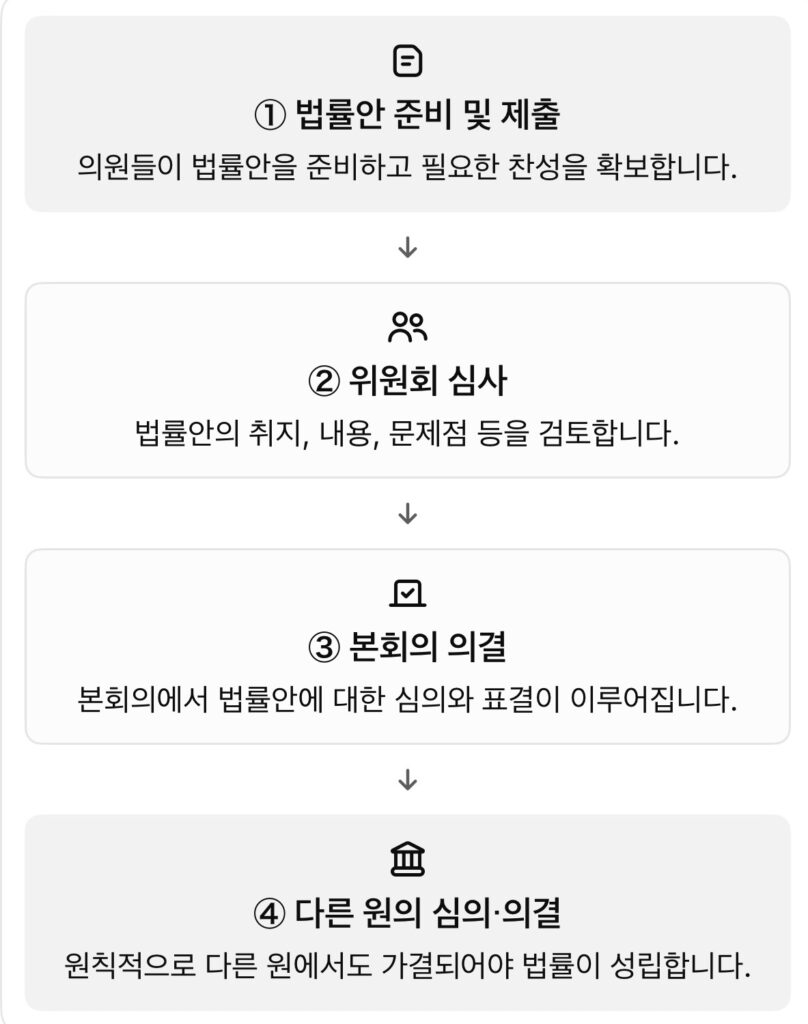
일본 국회법은 긴급한 경우 발의자 또는 제출자의 요청에 따라 해당 원의 의결로 위원회 심사를 생략할 수 있도록 규정하고 있습니다. 따라서 위원회 심사는 원칙적인 절차이지만, 모든 법률안이 반드시 동일한 순서로 심의되는 것은 아닙니다.
5. 한쪽 원에서 통과되면 법률이 되는 것일까요?
그렇지 않습니다.
일본은 양원제 국가입니다. 따라서 의원이 법률안을 제출한 원에서 가결되더라도, 원칙적으로 다른 원의 심의와 의결을 거쳐야 합니다.
예를 들어 중의원 의원들이 제출한 법률안이 중의원에서 가결되었다면, 해당 법률안은 참의원으로 보내져 심의됩니다. 참의원에서도 가결되면 법률로 성립합니다.
다만 양원이 서로 다른 결정을 내리는 경우에는 일본 헌법이 정한 절차가 적용됩니다. 일정한 조건에서는 중의원이 다시 법률안을 가결함으로써 법률을 성립시킬 수 있습니다.
따라서 의원 발의와 법률 제정은 구분해야 합니다.
의원 발의는 입법 절차의 시작입니다. 실제 법률이 되기 위해서는 국회 내부의 심의와 표결, 그리고 양원 사이의 절차를 거쳐야 합니다.
6. 의원 입법은 일본 정치에서 어떤 의미가 있을까요?
의원 입법의 의미는 단순히 법률안을 제출할 수 있다는 데 그치지 않습니다.
국회의원은 정부의 정책을 심의하고 감시하는 역할뿐 아니라, 사회의 문제를 발견하고 입법 대안을 제시하는 역할도 담당합니다.
특히 야당 의원의 입법 활동은 정부가 추진하는 정책과 다른 해결책을 제시하는 통로가 될 수 있습니다. 여당 의원 역시 정부의 기존 정책만을 따르는 것이 아니라, 지역구와 사회의 요구를 바탕으로 새로운 입법을 제안할 수 있습니다.
물론 법률안이 실제로 통과될 가능성은 국회 내 의석 분포, 정당 간 협의, 위원회 심사, 양원의 구성 등에 영향을 받습니다. 법률안을 발의할 수 있다는 것과 그 법률안을 통과시킬 수 있다는 것은 서로 다른 문제입니다.
또한 의원 입법이라고 해서 언제나 정부와 독립적으로 진행되는 것은 아닙니다. 여당 의원들이 정부와 협의하거나 정부의 정책을 뒷받침하는 법률안을 제출할 수도 있습니다.
따라서 일본의 입법 과정을 이해하려면 법률안의 제출 주체뿐 아니라, 누가 법률안의 내용을 준비하고 어떤 정치적 협의를 거쳐 통과시키려 하는지도 살펴볼 필요가 있습니다.
맺음말: 법률을 제안하는 권한과 제정하는 책임
일본에서 법률은 내각뿐 아니라 국회의원도 제출할 수 있습니다.
내각 제출 법률안은 행정부의 정책 수립과 내각법제국의 심사를 거쳐 내각이 국회 제출을 결정합니다. 의원 제출 법률안은 국회의원이 입법을 제안하고, 필요한 찬성 의원을 확보해 제출합니다.
그러나 두 경로 모두 법률안이 제출된 이후에는 원칙적으로 국회의 심의와 의결을 거쳐야 합니다.
이 과정을 통해 우리는 입법이 단순히 법률 문장을 작성하는 작업이 아니라는 사실을 알 수 있습니다. 사회의 어떤 문제를 법률로 해결할 것인지 결정하고, 그 해결책을 다른 의원들과 논의하며, 법률이 사회 전체에 미칠 영향을 판단하는 과정이기도 합니다.
앞서 살펴본 에드먼드 버크의 대의정치론과 연결해 생각해 볼 수도 있습니다. 버크는 대표자가 선거에서 자신을 지지한 사람들의 요구만을 따르는 것이 아니라, 자신의 판단을 바탕으로 사회 전체의 이익을 고려해야 한다고 보았습니다.
이 관점에서 보면 의원 입법은 단순히 의원에게 부여된 권한이 아닙니다. 법률을 제안하는 사람에게는 그 법률이 왜 필요한지 설명하고, 어떤 결과를 가져올지 검토하며, 사회 전체에 대한 책임을 고민해야 할 의무도 따릅니다.
국회의원이 법률안을 제출할 수 있다는 사실만으로 충분할까요? 아니면 우리는 그 법률안이 어떤 문제의식에서 출발했고, 누구의 이익을 고려하며, 사회 전체에 어떤 영향을 미칠지도 함께 살펴봐야 할까요?
일본의 입법 과정을 이해한다는 것은 제도의 절차를 아는 데서 끝나지 않습니다. 법률을 제안하고 심의하고 의결하는 사람들이 어떤 책임을 지는지 묻는 일이기도 합니다.
How Are Laws Made in Japan? (2) Bills Introduced by Members of the Diet
Understanding Japan’s Legislative Process: From Introducing a Bill to Enacting a Law
In the previous article, we examined government bills in Japan and the role of the Cabinet Legislation Bureau. We looked at how a ministry develops a policy into a draft bill, which is then reviewed by the Cabinet Legislation Bureau and approved by the Cabinet before being submitted to the Diet.
However, not all Japanese legislation originates with the government. Members of the Diet can also introduce bills.
As elected representatives, Diet members can identify social problems and propose legislation to address them. Introducing legislation is an important function of the Diet, allowing lawmakers not only to deliberate on government policies but also to raise legislative issues themselves.
What requirements must Diet members meet to introduce a bill in Japan? And what procedures must a bill go through before it becomes law?
In this article, we will examine the legislative process, focusing on bills introduced by members of the Diet.
1. Can Diet Members Introduce Bills Directly?
In Japan, bills can be introduced by both the Cabinet and members of the Diet. Article 41 of the Constitution of Japan designates the Diet as the sole law-making organ of the state, while the Diet Act establishes the procedures through which Diet members can introduce legislation.
For example, a member may introduce a bill in the following circumstances:
•An emerging social problem cannot be adequately addressed under existing laws.
•A new system or additional protections for people’s rights are needed.
•A lawmaker wants to propose a legislative alternative to the government’s policy.
•An existing law needs to be revised or improved.
Member-initiated legislation therefore provides a way for lawmakers to propose solutions directly, rather than simply examining policies proposed by the executive branch.
However, an individual Diet member cannot generally introduce a bill alone. Japanese law specifies the number of supporting members required to introduce legislation.
2. How Many Members Are Required to Introduce a Bill?
Japan has a bicameral legislature consisting of the House of Representatives and the House of Councillors. The number of members required to introduce a bill depends on which chamber receives it and whether the bill requires budgetary measures.
Under Article 56 of the Diet Act, the requirements are as follows.
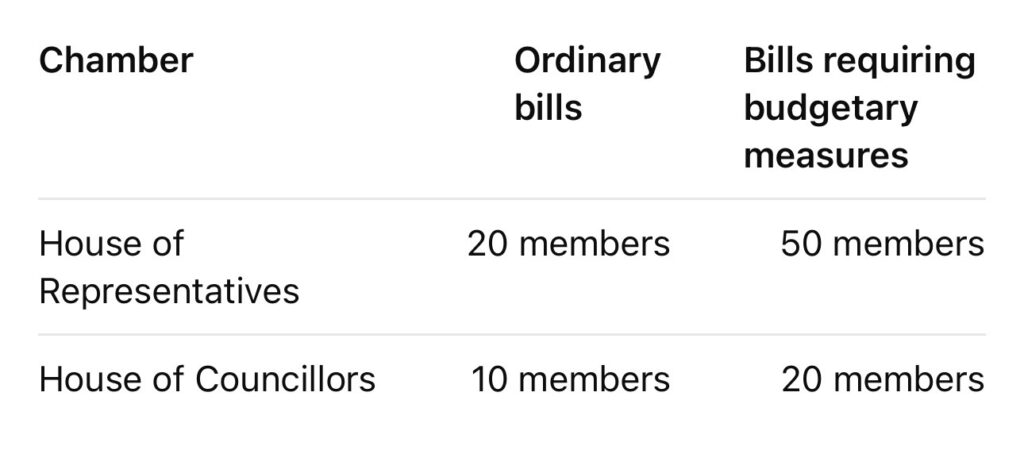
Bills requiring budgetary measures must be accompanied by a document explaining the necessary expenditure.
These requirements illustrate an important feature of member-initiated legislation.
Although an individual lawmaker can identify a legislative issue, formally introducing a bill generally requires support from other members. Member-initiated legislation may begin with one person’s concern, but it requires cooperation to move forward.
3. How Are Members’ Bills Prepared?
Before introducing a bill, lawmakers need to clarify what they want to change, why new legislation is necessary, and which provisions should be introduced or amended.
Members may prepare bills themselves or seek legislative assistance from the legal bureaus of the respective chambers.
Japan has two such institutions: the House of Representatives Legislation Bureau and the House of Councillors Legislation Bureau. They support legislative activities by helping members draft legal provisions and examine the legal aspects of proposed legislation.
Unlike government bills, members’ bills are not generally required to undergo prior examination by the Cabinet Legislation Bureau. This does not mean they are prepared without legal review. Members can use the legislative support systems within their respective chambers.
Once a draft is ready, the members proposing it must secure the required support and submit it through the prescribed procedure, together with a statement explaining the reasons for the proposal. Bills requiring budgetary measures must also include the necessary expenditure documentation.
Here we can see the difference between government bills and members’ bills.
Government bills are developed through the responsible ministry, reviewed by the Cabinet Legislation Bureau, and submitted with Cabinet approval. Members’ bills, by contrast, are proposed by Diet members, who must secure the required support before submitting them.
The preparation processes differ, but once submitted, both types of bills proceed through the Diet’s legislative procedures.
4. How Does the Diet Examine a Bill?
Once a bill has been submitted, it is generally referred by the presiding officer of the relevant chamber to a committee responsible for the subject matter. The committee examines the bill’s purpose and provisions, conducts questioning, and holds discussions.
For a members’ bill, the lawmakers who introduced it may explain its purpose and contents. Committee members can question the sponsors or relevant government officials. The committee may also hear expert opinions or consider whether amendments are necessary.
After the committee completes its examination, the bill proceeds to deliberation and a vote in the plenary session.
The process can be summarized as follows:
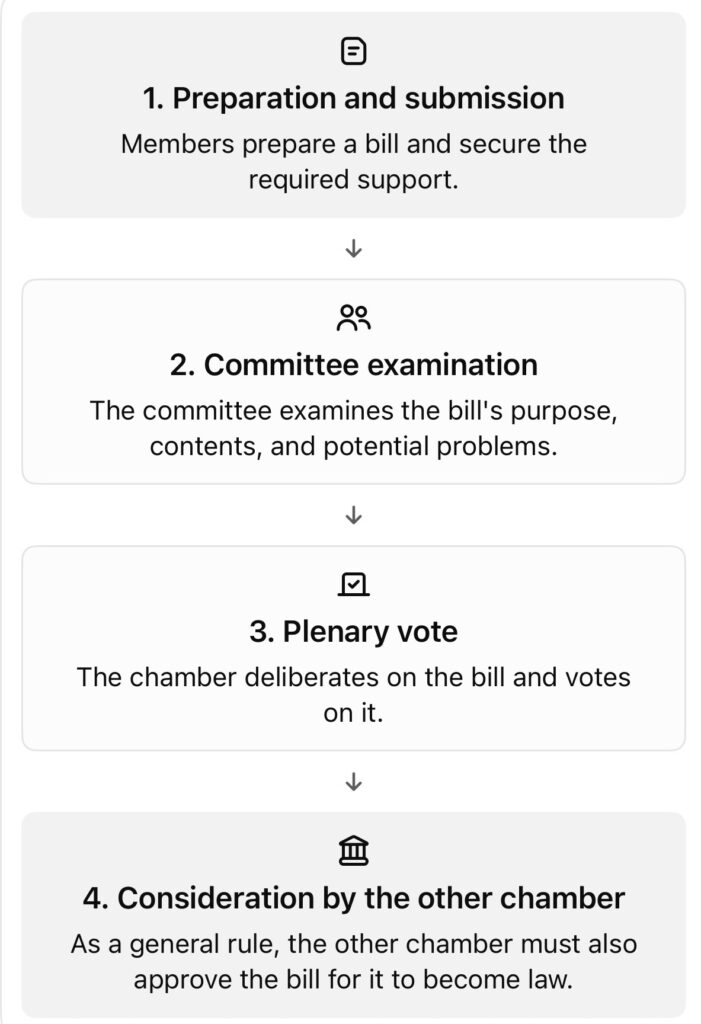
The Diet Act allows a chamber to waive committee examination by resolution at the request of the bill’s sponsor or submitter in certain circumstances. Committee examination is therefore the standard procedure, but not every bill necessarily follows exactly the same sequence.
5. Does a Bill Become Law After Passing One Chamber?
No.
Japan has a bicameral legislature. Even if a bill passes in the chamber where it was introduced, it generally needs to be considered and approved by the other chamber.
For example, if a bill introduced by members of the House of Representatives passes that chamber, it is sent to the House of Councillors for consideration. If the House of Councillors also approves it, the bill becomes law.
However, if the two chambers reach different decisions, the procedures established by the Constitution of Japan apply. Under certain conditions, the House of Representatives can pass a bill again and thereby enact it despite the disagreement.
It is therefore important to distinguish between introducing a bill and enacting a law.
Introducing a bill is the beginning of the legislative process. To become law, it must go through parliamentary deliberation and voting, as well as the procedures governing the relationship between the two chambers.
6. What Does Member-Initiated Legislation Mean for Japanese Politics?
The significance of member-initiated legislation extends beyond the right to submit bills.
Diet members are responsible not only for examining government policies and overseeing the executive branch, but also for identifying social problems and proposing legislative solutions.
Legislation introduced by opposition members, in particular, can provide a way to present alternatives to government policy. Members of the ruling party can also propose new legislation based on local concerns or broader social needs, rather than simply following existing government policies.
Of course, the likelihood that a bill will pass depends on factors such as the distribution of seats in the Diet, negotiations between political parties, committee deliberations, and the composition of both chambers. The ability to introduce a bill and the ability to secure its passage are two different things.
Nor does member-initiated legislation always proceed independently of the government. Ruling-party lawmakers may consult with the government or introduce bills that support its policies.
To understand Japan’s legislative process, therefore, we need to look beyond who formally submits a bill. We must also consider who develops its contents and what political negotiations take place to secure its passage.
Conclusion: The Authority to Propose Laws and the Responsibility to Enact Them
In Japan, legislation can be introduced by both the Cabinet and members of the Diet.
Government bills are developed through the executive branch, examined by the Cabinet Legislation Bureau, and submitted with Cabinet approval. Members’ bills are proposed by lawmakers, who must secure the required support before submitting them.
However, both types of bills generally proceed through deliberation and voting in the Diet after submission.
This process shows that lawmaking is more than the drafting of legal provisions. It involves deciding which social problems should be addressed through legislation, discussing possible solutions with other lawmakers, and considering the effects that a law may have on society as a whole.
This also connects with Edmund Burke’s theory of representative government, which we have explored in previous articles. Burke argued that representatives should not merely follow the demands of those who elected them. They should exercise their own judgment and consider the interests of the wider community.
From this perspective, member-initiated legislation is not simply a power granted to lawmakers. It also carries responsibilities: explaining why a law is necessary, examining its likely consequences, and considering its implications for society as a whole.
Is it enough that members of the Diet have the authority to introduce bills? Or should we also examine the problems that motivate those bills, whose interests they serve, and how they may affect society as a whole?
Understanding Japan’s legislative process is not merely about learning the formal procedures. It is also about asking what responsibilities those who propose, examine, and enact laws must bear.